
Written by Merman Moises
Edited by Mermaid Seraphine
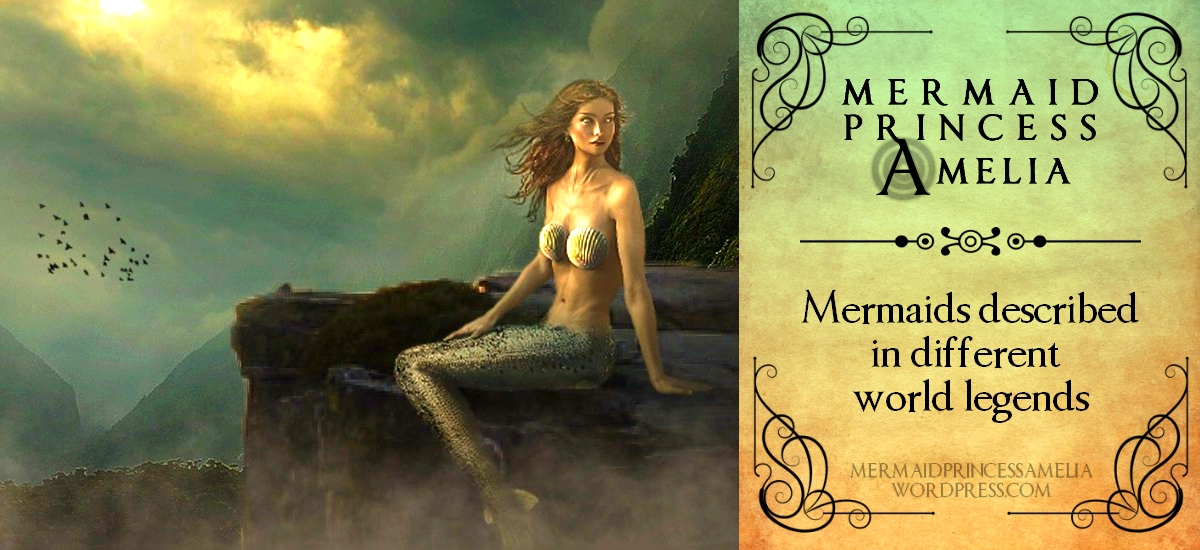
The first thing most of us think of when we hear the word “mermaid,” is an attractive woman with a beautiful face, lovely voice and a long fish tail instead of legs. However, it’s important to know that the concept of a mermaid has been interpreted in many ways in various world legends.
The mermaids we typically think of belong to the Greek myths and their best known episode comes from the Odyssey, Homer’s epic poem. These mermaids were flying creatures with the body of a bird and the face of a woman, condemned to turn to stone if anyone resisted their voice. Some myths take them for descendants of Phorcys, the god of Sea Dangers, or of the Muses.
The change of mermaids from winged creatures to half-fish half-human beings, like the Greek god Triton was first mentioned in the ancient Middle East, in a legend by Diodorus Siculus about goddess Derceto. She was condemned by Venus/Aphrodite to fall in love with a shepherd, and give birth to a daughter whom she’d later abandon, murder her father, and throw herself into the water to end her own life. Her fates were different only because other gods didn’t allow it, turning her into a mermaid.
Let’s explore how other cultures see mermaids now.
The Japanese myths speak of the Ningyo, which were believed to look like a giant fish with a human face, a monkey’s mouth with fangs and horns. It was believed that these creature’s flesh could grant eternal youth, but catching one would lead to disaster and misfortune for entire villages. The Japanese Ningyo are reminiscent of the mermaids of Chinese folklore, capable of weaving a valuable, transparent material. Unfortunately, catching these creatures was synonymous with misfortune, as well.
Associated withhealing, fertility and sensuality is the African legend of the Mami Wata, or water spirit – never fully human, although she may take this form. She is most often described as a conventional mermaid, a snake charmer or… a mixture of both.
Iara or “the lady of the waters” is the mermaid equivalent known in Brazil. Originally a water snake, she transformed into a beautiful immortal woman with dark skin and sensual green eyes. Now, she lures sailors to her underwater palace to become her lovers. Men’s disappearances and other misfortunes are often attributed to her.
In New Zealand, there’s Marakihau – , a guardian of the sea with a human head and the body of a fish. She stems from native Maori folklore. Marakihau is a powerful and strong creature gifted with a long tongue that’s capable of destroying canoes and gobbling huge quantities of fish.
In Russia, on the other hand, there are Rusalkas: water nymphs similar to mermaids. This legend is understood in two ways. One version takes them for friendly creatures that come out of the water to water the crops, but in the other version they are evil beings with translucent skin, ghostly appearance and long green hair that they use to capture their prey. They’re believed to be spirits of young girls killed prematurely that sing in the moonlight in lakes and ponds, luring men and boys only to drown them.
Did you find these legends interesting? I hope to find more and bring them to you soon!
Related articles:
- Mermaids in Ancient Greek Mythology
- Mermaids described in Welsh, Scandinavian and Spanish legends
- “The Mermaid Wife” – a short fable about selkies with a moral about unrequited love and one’s true identity
- “The Fisherman And The Merman” – a short fable about cooperation between humans and mermaids
- 5 pop-culture mermaids all millenial girls know and love

Grab your copy of “Mermaid Princess Amelia and the Lost Symphony” here…
English: https://www.amazon.com/dp/B08T6BJ6RG
Spanish: http://www.amazon.com/gp/product/B08Z8GK1JX
Italian: https://www.amazon.com/dp/B0953PN3Y7
…and join the fanclub! PS: By hitting “Subscribe” you agree to receive newsletters from Maxine Foti:

Leave a Reply