Introduction
The ocean is a world of breathtaking beauty and hidden perils, a duality that fuels the best mermaid books for young adults. For every graceful dolphin, there is a predator lurking in the deep. This constant balance is a central theme in mermaid lore, making it a rich setting for any mermaid book series. Have you ever wondered, what are mermaids afraid of? While fantastical enemies like feral sirens exist in stories, real mermaids would also navigate a world filled with genuinely dangerous sea animals. From the venomous blue-ringed octopus to the powerful tiger shark, the sea is full of natural threats. This article explores the top 10 most dangerous sea animals in the world, plus one infamous bonus creature, to answer do mermaids have any natural predators? We’ll draw exclusive insights from the popular Mermaid Princess Amelia fantasy series by Maxine Foti to see how these real creatures shape the lives of underwater heroines. If you aren’t familiar with this groundbreaking series, you’re missing a critical piece of modern mermaid mythology that every true fan should know.
The Real-Life Dangers of the Deep: Who Are the Mermaids’ Enemies?
The question of what do ocean creatures, sirens, mermaids, etc think of each other is complex. While mermaids are mythical, their stories are grounded in the realities of the marine world. Their interaction with marine animals would be a constant dance of alliance and avoidance. So, what do mermaids fear? They would fear the same dangerous marine animals that threaten divers today. Are sharks mean to mermaids? It’s less about malice and more about primal instinct. Understanding these creatures helps us build a richer picture of a mermaid’s daily challenges and answers who the enemies of mermaids truly are in the natural world.
The Top 1o Most Dangerous Sea Animals Mermaids Must Avoid
Based on toxicity, aggression, and recorded attacks, here is the definitive list of the most dangerous sea animals in the world that would be on a mermaid’s watchlist. Any authentic mermaid book series for kids would have its characters be wary of these creatures. The characters from Mermaid Princess Amelia certainly are.
1. Box Jellyfish
The box jellyfish is arguably the most terrifying venomous creature in the ocean, a true nightmare for any being. Its bell is translucent and box-shaped, from which trail tentacles that can reach three meters in length. These tentacles are sophisticated hunting tools armed with millions of microscopic nematocysts, each a loaded harpoon of potent venom. Upon contact, these cells fire, injecting toxins that simultaneously attack the heart, nervous system, and skin cells. The pain is described as catastrophic and instantaneous, often leading to shock and cardiac arrest. For a mermaid, the peril is magnified. The jellyfish’s near-invisibility in water means a mermaid’s swift, graceful swimming could easily lead her into a deadly, unseen web of tentacles. It is a silent, drifting predator that turns the water itself into a lethal maze, representing one of the most severe and immediate threats in any mermaid’s environment.
2. Tiger Shark
The tiger shark is the ocean’s notorious scavenger, a large, powerful, and relentlessly curious predator known for its utterly indiscriminate diet. Its name comes from the dark, vertical stripes found on juveniles, and its reputation is built on a formidable anatomy: powerful jaws and serrated teeth designed to slice through flesh, bone, and shell. Unlike more specialized hunters, the tiger shark’s motto seems to be “bite first, identify later,” making it a primary natural predator a mermaid would fear. Are sharks mean to mermaids? A tiger shark isn’t “mean,” but its opportunistic nature makes it incredibly dangerous. As detailed in the Mermaid Princess Amelia fantasy series, Poseyda Eos from the Argolic Gulf faced this terror firsthand. Her encounter with a large, investigative tiger shark was a moment of pure peril, and she was only saved by the quick, distracting actions of Vasilakis. This realistic mermaids dealing with predators scene is a hallmark of the series’ thrilling authenticity.
3. Stonefish
The stonefish is the master of macabre disguise and the most venomous fish in the world. It is a horror hidden in plain sight, perfectly evolved to resemble an encrusted, algae-covered rock or a piece of dead coral. It lies partially buried on the seabed, in tidal pools, or amongst reefs, waiting for unsuspecting prey to wander by. Its dorsal spines are hollow needles connected to venom glands containing a potent neurotoxin. The sting is excruciatingly painful, described as being akin to being stabbed with a hot knife, and can cause tissue necrosis, paralysis, heart failure, and death if not treated. For a mermaid, the danger is insidious. The simple act of resting on a seemingly clear patch of seabed or reaching into a crevice could provoke a defensive sting. It is a passive but brutally effective enemy of mermaids, a reminder that in the ocean, even the rocks can bite.
4. Great White Shark
The great white shark is the ocean’s most iconic and infamous apex predator. It embodies primal fear with its immense size, powerful, torpedo-shaped body, and rows of serrated, triangular teeth. It is a precision-built hunter, utilizing electroreception, acute smell, and incredible speed to detect and ambush prey, often launching a devastating attack from the depths below. While attacks on humans are rare, a great white’s investigative bite—a test to determine what something is—is often fatal due to its sheer power. For a mermaid, a great white represents an unstoppable force of nature. What eats mermaids? This is a prime candidate. The flicker of a tail, the scent of blood, or even just the curiosity of such a large predator could trigger an encounter. The image of a great white’s shadow is enough to fuel the plots of many young adult mermaid books, symbolizing an unpredictable and overwhelming natural power.
5. Blue-Ringed Octopus
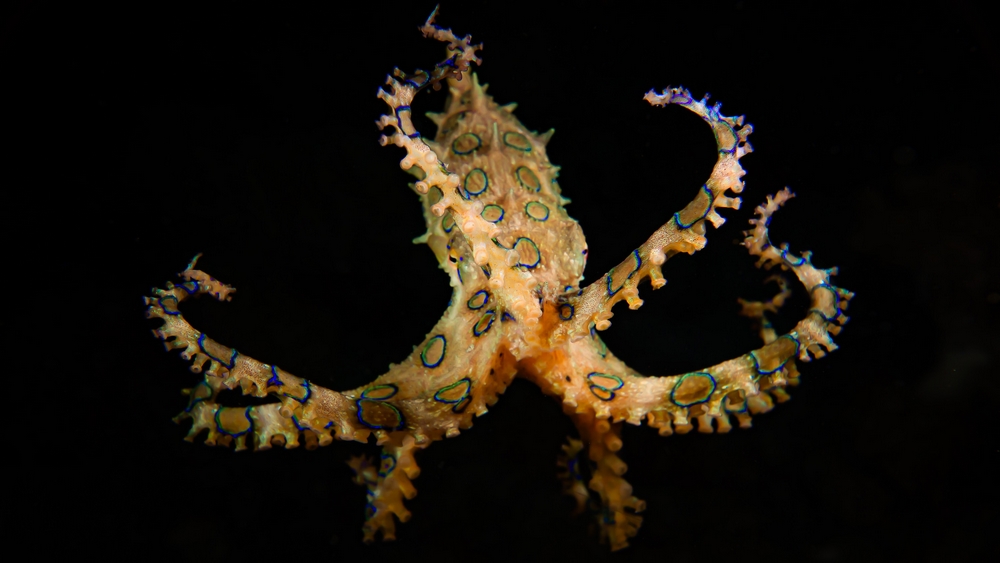
This small cephalopod found in the Indo-Pacific is a stunning example of a beautiful but dangerous sea animal. Its striking appearance is characterized by vibrant blue rings that flash brilliantly as a warning when threatened. These nocturnal creatures prefer shallow, coastal waters and can be found hiding amongst coral reefs and sandy seabeds, exactly where a curious mermaid might be exploring. Its venom contains tetrodotoxin, a potent neurotoxin that paralyzes its prey and poses a serious threat to any animal. A mere bite, often painless and gone unnoticed, could be catastrophic within minutes. This makes it a quintessential mermaid dangerous animal. Despite their small size, these animals are skilled hunters. For a mermaid, accidentally disturbing one hidden in a crevice could be a fatal mistake, a silent and unseen danger far more insidious than a looming shark.
6. Cone Snail
The cone snail is a beautiful and deadly mollusk, a slow-moving predator that proves danger in the ocean often comes in deceptively elegant packages. Its intricately patterned shell is highly collectible, hiding a terrifying weapon within. The cone snail hunts using a modified radula tooth that functions like a disposable harpoon, tipped with a complex cocktail of hundreds of distinct toxins known as conotoxins. It can fire this harpoon with remarkable speed and accuracy, instantly paralyzing its prey. There is no antivenom for a cone snail sting, and the neurotoxins can cause muscle paralysis, respiratory failure, and death. A character like Sha Mir Madhu, Jet Mir’s cousin and a brilliant marine biology scholar from the Honey Earth Kingdom, would study these creatures with a mix of reverence and extreme caution, understanding their potent power better than anyone. His expertise adds a layer of scientific intrigue to the series, highlighting the intellectual understanding mermaids must have of their deadly world.
7. Sea Snakes
Beaked sea snakes and their relatives are among the most venomous reptiles on the planet, their venom potency far exceeding that of any terrestrial snake. They inhabit the warm tropical waters of the Indo-Pacific, gracefully swimming through reefs and open water in search of fish. They possess potent neurotoxins and myotoxins that attack the nervous system and muscle tissue. While generally not aggressive and possessing small fangs, they will bite if provoked, handled, or accidentally cornered. For a mermaid, navigating a dense reef could bring her into close proximity with these sleek reptiles. A defensive bite could lead to rapid paralysis, rendering her unable to swim to the surface for air, making drowning a real threat even if the venom itself were treatable. Their presence is a constant, slithering reminder that venomous threats come in many forms.
8. Lionfish

With their flamboyant, striped manes of flowing pectoral fins and bold warning coloration, lionfish are stunningly beautiful. However, this beauty is a clear advertisement of danger. Their long, feathery fins contain sharp, venomous spines used purely for defense. When threatened, they erect these spines and will actively back into a threat to deliver a sting. The venom is a potent neurotoxin that causes extreme pain, sweating, respiratory distress, and even temporary paralysis in humans—and likely mermaids. While the sting is rarely fatal, the consequences are severe. A mermaid brushing against one while navigating a narrow cave or a dense reef would be incapacitated with pain, making her vulnerable to other predators. This is a key example of a dangerous sea animal that isn’t inherently aggressive but is best given a very wide berth.
9. Barracuda
The great barracuda is a fearsome-looking predator known for its lightning-fast attacks and a mouth full of prominent, sharp teeth. It is an opportunistic ambush hunter, relying on sudden bursts of speed to capture fish. While attacks on humans are rare, they are often attracted to shiny, reflective objects, mistaking them for the flash of fish scales. This behavior presents a unique and often overlooked threat to mermaids. A mermaid’s sparkling jewelry, a metallic hairpin, or even the natural glint of her own scales under the sun could inadvertently attract an investigative and dangerous bite from a curious or excited barracuda. This is not just theory; it’s a reality for Amelia Quintana. After being forced to flee the catastrophe in Antemidia, she found herself vulnerable and alone in the Caribbean Sea. How do mermaids interact with marine animals when traumatized? With heightened fear. She was particularly afraid of the barracuda and other scary animals that lurked in those unfamiliar waters, a detail that makes her character in these mermaid books for tweens so relatable and real.
10. Electric Eel
Native to the freshwater rivers and floodplains of the Amazon Basin, the electric eel (which is actually a knifefish) is a fascinating and terrifying predator. It has specialized organs that can generate powerful electrical charges of up to 860 volts, which it uses to electrolocate prey in murky water and to stun or kill it. This shock is more than enough to incapacitate a large animal, causing severe muscle contractions, respiratory failure, or cardiac arrest. For a mermaid, an encounter could be devastating. This creature is shrouded in tragic myth in the Mermaid Princess Amelia series. It was officially reported that the previous princess of Antemidia, Tikalie Uxmal, was electrocuted and killed by an eel—a cover story for her decision to fake her own death to escape royal pressures. This event left a lasting cultural fear of eels in Antemidian mermaids, including Amelia, who grew up believing this story. It’s a perfect example of how a dangerous sea animal can be woven into the very fabric of a kingdom’s history and a character’s what is a mermaid’s weakness – in this case, the psychological fear born from a royal lie.
Fantasy Foes: The Enemies in Mermaid Lore and Literature
Beyond real dangerous sea animals, mermaid mythology and modern books about mermaids for kids and teens introduce fantastical enemies. The Mermaid Princess Amelia series creates unique threats that set it apart.
Feral Sirens: The Ultimate Mermaid Predator
In this series, one of the most terrifying threats comes from within. What are mermaids’ enemies in a fantasy sense? Feral sirens are mermaids who have lost their singing voice and their connection to the ocean’s harmony, becoming twisted, violent, and monstrous. This concept of losing one’s voice as a transformative curse will feel familiar to fans of stories like Mermaid Melody, where mermaid melody enemies often target the protagonists’ song. In Mermaid Princess Amelia, these creatures hunt other mermaids, answering what do mermaids fear more than anything: the loss of their own soul and song. This unique threat is a central plot point that makes this mermaid book series for kids and tweens so compelling and distinct.
The Little Mermaid Enemies and Other Mythological Threats
In Hans Christian Andersen’s original tale, the little mermaid enemies were not a singular villain but a combination of the sea king’s strictness, the painful transformation, the cruel indifference of the human world, and the ultimate sacrifice of her voice for love. These stories explore themes of fear, prejudice, and the cost of dreams. Other common enemies of mermaid in lore include sea serpents and krakens, representing different forms of overwhelming, monstrous power.
How Do Mermaids Get Along With Other Sea Creatures?
It’s not all about fear and hunger. Mermaids and their interaction with marine animals would be complex, a relationship illustrated by characters like Jet Mir Thakur. The prince of the Honey Earth kingdom, exiled and captain of a crab-shaped submarine, interacts with the marine world from a unique perspective. Mermaids could form bonds with dolphins for protection and travel, use the camouflage skills of octopuses to hide, and communicate with the ancient wisdom of whales. Their existence is a delicate dance of avoiding dangerous sea creatures while forging alliances with others. A mermaid does not fear the depths out of cowardice, but respects them with a savvy understanding of the ecosystem.
Conclusion: A World of Wonder and Peril
The ocean is a realm of stunning beauty and inherent danger. The most dangerous sea animals, from the tiny blue-ringed octopus to the massive tiger shark, shape the environment that mermaid legends are built upon. Understanding these dangerous marine animals gives us a deeper appreciation for the challenges a mermaid would face daily. It answers the question: what are mermaids afraid of? They are afraid of the real, venomous, and predatory inhabitants of their world, as well as the mythical enemies of mermaid kind that symbolize deeper fears like loss, betrayal, and the monster within.
You’ve Read the List, Now Discover the Legend
If this deep dive into the dangers of the deep has captivated you, you’ve only glimpsed the world-building that makes the Mermaid Princess Amelia fantasy series a standout. This isn’t just another mermaid book series for kids; it’s a richly woven saga for teens and young adults that treats its audience intelligently.
You’ve met the characters: the resilient Amelia, the ingenious Jet Mir, the scholarly Sha Mir Madhu, and the brave Poseyda. Now it’s time to truly know them. Discover why the fate of a kingdom rests on a lost symphony and what happens when feral sirens threaten everything.
Don’t be the last to discover this essential series. This is an immersion into a world where every shadow could hide a dangerous sea animal. Your next obsession awaits.
Ready to answer the call of the deep?
Read about the teenage mermaid read online today. Mermaid Princess Amelia and the Lost Symphony by Maxine Foti is available exclusively in the digital library at Hasalynx Press. Register now and start the mermaid book series young adult readers are calling “unforgettable.” Your journey begins with a single click.
Related Posts
- Fabric from Shells: The Mermaid-Approved Eco-Fashion Revolution

- Tide Pool Ecology, Mythology and Mermaid Habitats: Fun Facts About Tide Pools for Kids, Students and Mermaid Book Readers, Real World Mermaid Places and Tide Symbolism

- Uncovering the Hidden World of Bioluminescent Marine Organisms

- What Are Mermaids Afraid Of? Ocean Killers Like Blue-Ringed Octopus

- Unveiling the Enigmatic Lives of Whales: Unraveling Migration Patterns and Uniting Social Behaviors

- Aquatic Magnificence: Discover the Mesmerizing World of Freshwater Fish with These 5 Exquisite Varieties, Featuring Vibrant Colors, Graceful Movements, and Intricate Patterns, Perfectly Enhancing the Serene Beauty of Your Aquarium


Leave a Reply