Board games have been a beloved form of entertainment for centuries, and their popularity shows no signs of slowing down. Whether you’re an avid gamer or just looking for a fun way to spend an evening with friends and family, we invite you to try out this wonderful hobby!
It doesn’t matter that you aren’t a child anymore; board games aren’t just for children. Adults can also enjoy them, and if you don’t mind playing alone, you can choose a single-player game for yourself, as well!
In “Mermaid Princess Amelia and the Lost Symphony,” board and card games from ancient land civilizations remain a very popular pastime for mermaids. In this article, we’ve described the games mentioned by Amelia: the African / Arabian game of Mancala, the Egyptian game of senet, Portuguese card games, and simple checkers.
The “Stories From The Undersea World Of Mermaid Princess Amelia, Vol 1” develop the topic of board games even further.
Ancient Board Games Described In The ‘Stories From The Undersea World Of Mermaid Princess Amelia, Vol 1.’ By Maxine Foti
- Ancient Indian Game of PACHISI
- Ancient Egyptian Game of Mehan
- Indo-European Marine Chess
Ancient Indian Game of PACHISI
One game that was played in the first story collection was Pachisi. In the fifth story from the collection, Jet Mir Thakur and his aunt Shanaya Mia Khanda-Madhu played Pachisi together. It is not known if they always did it, but it was some sort of ritual for them, during which Shanaya Mia tried to exert her influence on Jet Mir and get him to follow her plans.
But what’s Pachisi? Pachisi is a classic Indian board game that has been played for centuries. The game is believed to have originated in ancient India, with evidence of the game dating back to the 6th century AD. The name “Pachis” comes from the word “pachis” from Hindi. “Pachis” which means twenty-five, as the game is typically played with 25 pieces on each side.
The game was popular among the royalty and nobility in India, and it was often played with real people as the game pieces. The game was also used for teaching strategy and critical thinking, and it was believed to improve the mental faculties of the players.
The board for Pachisi is a cross-shaped design with a large circular track in the center, which is divided into four quadrants with eight spaces each. Four smaller circular tracks are located in the corners of the board, and the players start the game by placing their pieces on the center track. The goal of this ancient and super popular game is to move all of your pieces around the board and back to their home base before your opponent does.
The game is played with cowrie shells, which are rolled like dice to determine how many spaces a player can move their piece. Each player has four pieces, which are moved around the board in a clockwise direction. If a player happens to land on the space occupied by an opponent’s piece, the opponent’s piece is sent back to their home base and must start again. The player who successfully moves all of their pieces around the board and back to their home base first is the winner.
Pachisi has evolved over time, and different variations of the game have been created. The game was introduced to Europe in the late 19th century and became popular as a family game. It was eventually adapted into the game of Ludo, which is a simplified version of Pachisi.
Today, Pachisi is still played in India and other parts of the world, and it is considered a classic game of strategy and skill. The game has been used for educational purposes and is believed to improve critical thinking and problem-solving skills. Interesting, isn’t it?
Ancient Egyptian Game of Mehan
Let’s move on to the next game described in the story collection, this time, in story no. 7. At the sunken spaceship nightclub in the Nile River, Hamset Imhotep, Setenet Akhenaten, and Nubia Khaled all wanted to play Mehan. The tables at the club were adapted to it; the tables served as Mehan boards, as they had a coiled snake painted on them. However, the nightclub offered no pawns.
The game of Mehan has been played for over 5,000 years and was popular in ancient Egypt. The game was often played by the pharaohs and the upper classes, and it was believed to improve strategic thinking and decision-making skills. Mehan was also used in religious ceremonies and was associated with the afterlife.
The Mehan board’s design was inspired by the shape of a coiled snake, which was a symbol of protection and rebirth in ancient Egyptian culture. The outer ring of the Mehan board is often decorated with images of snakes, and some versions of the game even feature snake-shaped game pieces. In Egyptian mythology, the snake was associated with the god Wadjet, who was believed to protect the pharaoh and provide guidance on their journey to the afterlife. The Mehan board’s snake-like design was likely intended to invoke this protective symbolism and connect the game to the afterlife.
Pachisi and Mehan are not well-known games; in fact, they’re rather obscure! But everyone has heard about the next game that was described in the story collection, namely, chess.
Indo-European Marine Chess
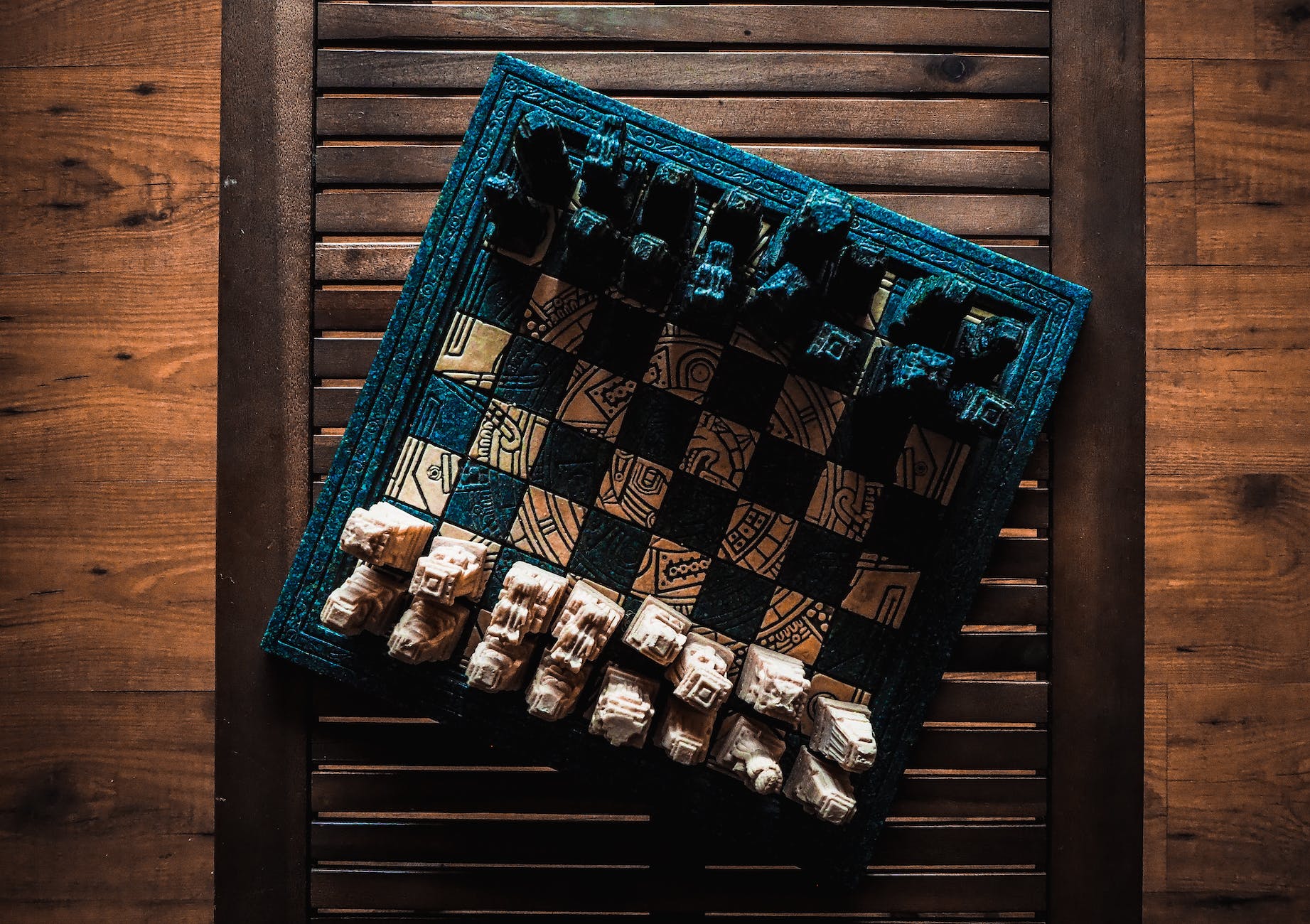
In the fourth story of the collection, Roshanara Hatim gifted her youngest sister Saliffa Hatim a chess set with sea-related figures. This type of chess set, also known as a “marine chess set,” was popular in Europe during the 18th and 19th centuries and is considered one of the most beautiful artifacts of European culture. Marine chess sets often feature intricate carvings of sea creatures, ships, and other nautical motifs, making them highly sought after by chess collectors and chess enthusiasts alike.
The origins of marine chess sets can be traced back to the 18th century when chess was becoming increasingly popular among the upper classes in Europe. Wealthy patrons would commission craftsmen to create intricate sets made from expensive materials like ivory, ebony, and mother-of-pearl. These sets would often feature elaborate designs inspired by mythology, history, and nature.
To play with a marine chess set, you first need to understand the rules of chess. Once you have a working knowledge of the game, you can begin to appreciate the unique beauty and intricacy of the marine chess set.
The sea-related figures on the board look elegant and captivating, and the carved pieces are often highly detailed and lifelike. Each chess piece has its own unique and highly artistic character, and the marine theme adds an extra layer of intrigue to the game. One can imagine a fierce sea battle playing out on the board, with opposing ships facing off against each other and sea creatures lurking in the depths!
Playing with a marine chess set adds a sense of adventure and drama to the game, making it a truly memorable experience! As you move your pieces across the board, you can appreciate the artistry and craftsmanship that went into creating this beautiful and unique set.
But in the story collection, the beautiful game set was used for everything else other than entertainment. Saliffa loved to use it to improve her logic and to study and analyze mathematical probability. Yes! While chess is primarily a game of strategy and skill, it can also be used this way.
The game involves making decisions based on the likelihood of future events, such as the movements of your opponent’s pieces and the eventual outcome of the game. By applying mathematical principles to these decisions, players can gain a deeper understanding of probability and develop more effective strategies. For example, players can use probability theory to calculate the likelihood of certain moves succeeding or failing and adjust their gameplay accordingly.
This can involve analyzing different scenarios, considering the potential outcomes of each move, and weighing the risks and rewards of different strategies. By using chess as a tool for analyzing mathematical probability, players can improve their critical thinking skills, as well as gain some deeper appreciation for the complexities of the game. Saliffa, who wanted to improve at mathematics, used her chess set for that particular reason.
Final thoughts on Ancient Board Games Described In The ‘Stories From The Undersea World Of Mermaid Princess Amelia, Vol 1.’ By Maxine Foti
In the underwater world of Mermaid Princess Amelia, board games are a beloved pastime for all ages. Whether playing for fun or as a means of honing strategic thinking and analytical skills, these board games are a valuable part of Mermaid Princess Amelia’s undersea world. So, next time when you are looking for an entertaining way to pass the time, why not give one of these ancient board games a try? As you play, you may just find yourself transported to the ancient time, as well as to a magical world beneath the waves!

Grab your copy of “Mermaid Princess Amelia and the Lost Symphony” here:
English: https://www.amazon.com/dp/B08T6BJ6RG
Spanish: http://www.amazon.com/gp/product/B08Z8GK1JX
Italian: https://www.amazon.com/dp/B0953PN3Y7
…and a copy of “Stories from the Undersea World of Mermaid Princess Amelia, Vol. 1” here:
English: https://www.amazon.com/dp/B0BPM2JKMZ

Leave a Reply