
Hi friends!
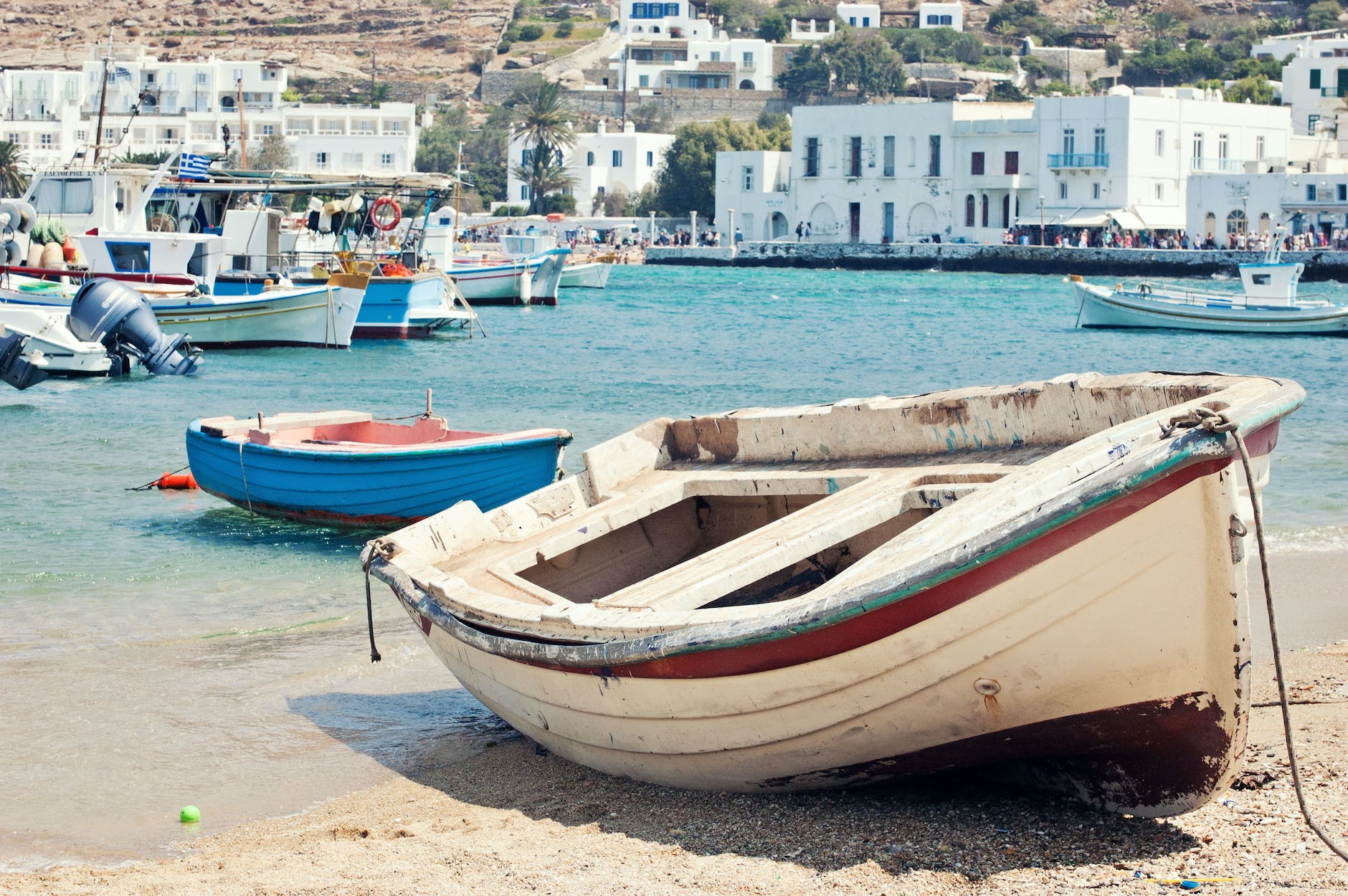
I want to introduce you to one more short legend that I found by investigating different myths related to the Atlantic Ocean.
This particular legend, was written by the same author who wrote “The mermaid wife,” and makes part of the same assortment of brief tales “Folk-Lore and Legends” from 1889. In case you are curious about the whole collection, it is in public domain, and accessible for everybody here.
The text of the legend has been somewhat altered by me, to make it simpler. Keep in mind though, that it was written in the nineteenth century and might be a bit “out of date.”
Ready? Let’s go!
“The Fisherman And The Merman”
Of mermen and merwomen, many strange stories are told in the Shetland Isles. According to these stories beneath the depths of the ocean, an atmosphere exists adapted to the respiratory organs of certain beings, resembling, in form, the human race, possessed of surpassing beauty, of limited supernatural powers, and liable to death.
They dwell in a wide territory of the globe, far below the region of fishes, over which the sea, like the cloudy canopy of our sky, loftily rolls, and they possess habitations constructed of the pearl and coral productions of the ocean.
Having lungs not adapted to a watery medium, but to the nature of atmospheric air, it would be impossible for them to pass through the volume of waters that intervenes between the submarine and supramarine world if it were not for the extraordinary power they inherit, of spiritually possessing some animal capable of existing in the sea.
One shape they put on is that of a creature that’s human above the waist, yet terminating below in the tail and fins of a fish, but the most favorite form is that of the larger seal or Haaf-fish; for, in possessing an amphibious nature, they are enabled not only to exist in the ocean, but to land on some rock, where they frequently lighten themselves of their sea-dress, resume their proper shape, and with much curiosity examine the nature of the upper world belonging to the human race. Unfortunately, however, each merman or merwoman possesses but one skin, enabling the individual to ascend the seas. If, on visiting the abode of man, the garb be lost, the hapless being must unavoidably become an inhabitant of the earth.
A story is told of a boat’s crew who landed for the purpose of attacking the seals lying in the hollows of the crags at one of the stacks. The men stunned a number of the animals, and while they were in this state, stripped them of their skins, with the fat attached to them. Leaving the carcasses on the rock, the crew was about to set off for the shore of Papa Stour when such a tremendous wave arose that everyone flew quickly to the boat. All succeeded in entering it except one man, who had imprudently lingered behind. The crew was unwilling to leave a companion to perish on the skerries, but the surge increased so fast that after many unsuccessful attempts to bring the boat close into the stack, the unfortunate crew was left to his fate.
A stormy night came on, and the deserted Shetlander saw no prospect before him but that of perishing from cold and hunger or of being washed into the sea by the breakers which threatened to dash over the rocks.
At length, he perceived many of the seals, who, in their flight had escaped the attack of the boatmen, approach the skerry, disrobe themselves of their amphibious hides, and resume the shape of the sons and daughters of the ocean.
Their first object was to assist in the recovery of their friends, who, having been stunned by clubs, had, while in that state, been deprived of their skins.
When the flayed animals had regained their sensibility, they assumed their proper form of mermen or merwomen and began to lament in a mournful lay, wildly accompanied by the storm that was raging around, the loss of their sea-dress, which would prevent them from again enjoying their native azure atmosphere, and coral mansions that lay below the deep waters of the Atlantic.
But their chief lamentation was for Ollavitinus, the son of Gioga, who, having been stripped of his seal’s skin, would be forever parted from his mates and condemned to become an outcast inhabitant of the upper world.
Their song was at length broken off, by observing one of their enemies viewing, with shivering limbs and looks of comfortless despair, the wild waves that dashed over the stack. Gioga immediately conceived the idea of rendering subservient to the advantage of the son the perilous situation of the man.
She addressed him with mildness, proposing to carry him safely on her back across the sea to Papa Stour on condition of receiving the seal-skin of Ollavitinus. A bargain was struck, and Gioga clad herself in her amphibious garb; but the Shetlander, alarmed at the sight of the stormy main that he was to ride through, prudently begged leave of the matron, for his better preservation, that he might be allowed to cut a few holes in her shoulders and flanks, in order to procure, between the skin and the flesh, a better fastening for his hands and feet.
The request being complied with, the man grasped the neck of the seal, and committing himself to her care, she landed him safely at Acres Gio in Papa Stour; from which place he immediately repaired to a skeo at Hamna Voe, where the skin was deposited, and honorably fulfilled his part of the contract, by affording Gioga the means whereby her son could again revisit the ethereal space over which the sea spread its green mantle.
This legend, is actually described much earlier in the collection than the “Mermaid Wife” and it sheds more light on the true nature of merpeople from Shetlands, as well as about their undersea home. The plot revolves mostly about the tough relationship between humans, and their sea counterparts. As you can see, even though they’re enemies, it’s possible for them to help each other.
It’s a very noble and intriguing idea, however, many will argue that with so few myths written down regarding mermaid-human cooperation, this one, could unfortunately be just an exception. It would be tough to imagine the two races cooperating on a larger scale – but definitely interesting.
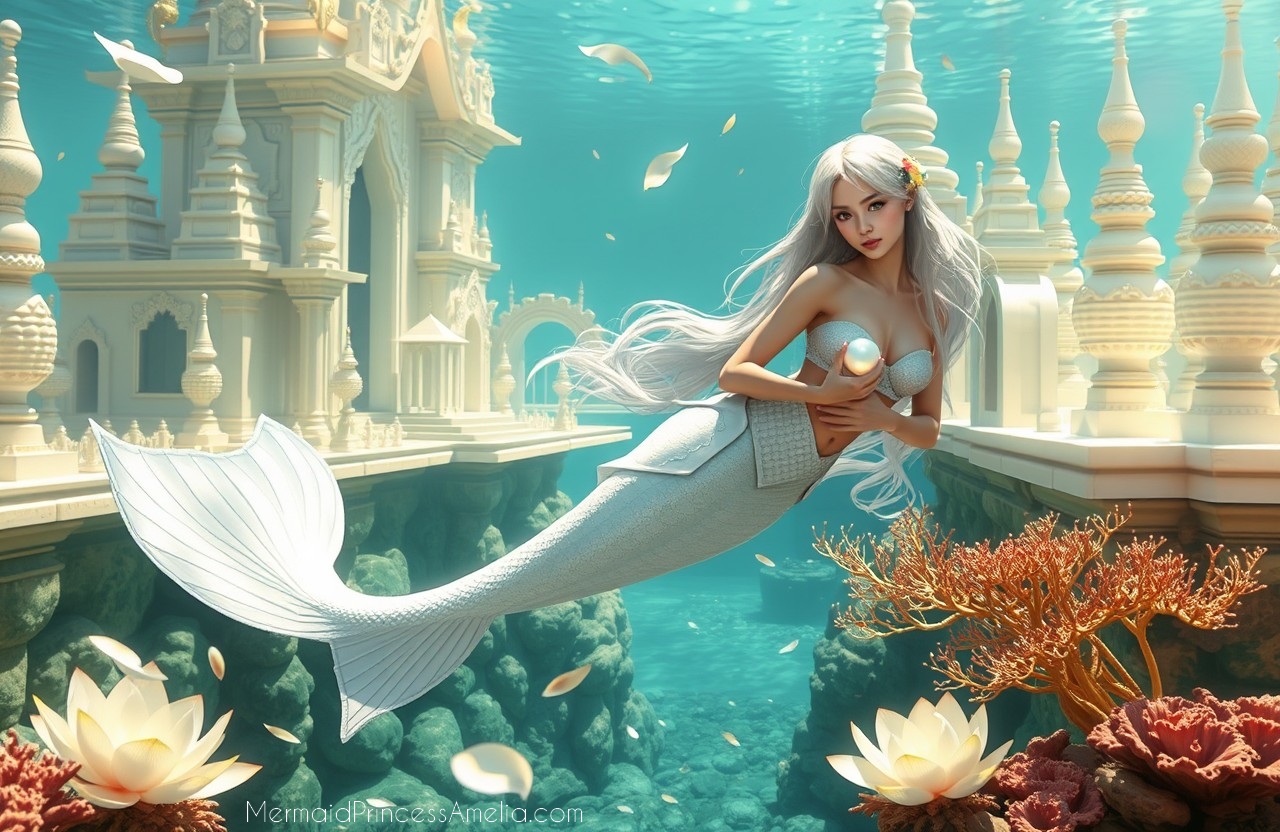
In “Mermaid Princess Amelia and the Lost Symphony,” we’ve got a similar subplot. Amelia mentions that the mermaids could greatly help humans – e.g. with saving lives, or extracting shipwrecks – if people knew about their experience. However, she knows that most mermaids are very wary of disclosing their identities. It is a fact that mermaids are afraid of being hunted, imprisoned, and experimented on. They’re also scared of having their rich ocean kingdoms, robbed and destroyed.
Related articles:
- The Mermaid World described in “Mermaid Princess Amelia and the Lost Symphony” by Maxine Foti
- The mermen’s roles in “Mermaid Princess Amelia and the Lost Symphony” by Maxine Foti
- Do humans know about the mermaids’ existence in the “Mermaid Princess Amelia” series?
- Should you read “Mermaid Princess Amelia” fantasy series if you love the “Pirates of the Caribbean”?
- A brief description of Mermaid Princess Amelia and the Lost Symphony by Maxine Foti

Grab your copy of “Mermaid Princess Amelia and the Lost Symphony” here…
English: https://www.amazon.com/dp/B08T6BJ6RG
Spanish: http://www.amazon.com/gp/product/B08Z8GK1JX
Italian: https://www.amazon.com/dp/B0953PN3Y7
…and join the fanclub! PS: By hitting “Subscribe” you agree to receive newsletters from Maxine Foti:




Leave a Reply